



IRDAI Just Proposed the Biggest Shake-Up in Insurance Distribution in a Decade.
 29-Sep-2026
 2 mins read
Trending Now
-

Turtlemint Fintech Solutions IPO GMP, Open Date, Price Band, Issue Size 18-Jun-2026
-
.jpg)
SpaceX IPO: Elon Musk Becomes World's First Trillionaire — Key Facts Explained 13-Jun-2026
-

Zepto IPO, Open Date, Issue Size, Price Band and UDRHP Filed 12-Jun-2026
-
Shah Metacorp Rights Issue May 2026 Details, Record Date, Issue Price 26-May-2026
-

Jio Is Going Public. Here's What That Actually Means for You 11-May-2026
-

Parle Products IPO: India’s Most Iconic Biscuit Brand Going Public? 30-Apr-2026
-
Gujarat Cotex Rights Issue 2026 Details, Record Date, Issue Price 27-Mar-2026
-
.jpg)
Avi Polymers Rights Issue 2026 Details, Record Date, Issue Price 11-Feb-2026
-
D & H India Rights Issue 2026 Details, Record Date, Issue Price 05-Feb-2026
-
Avasara Finance Rights Issue 2025 Details, Record Date, Issue Price 29-Dec-2025
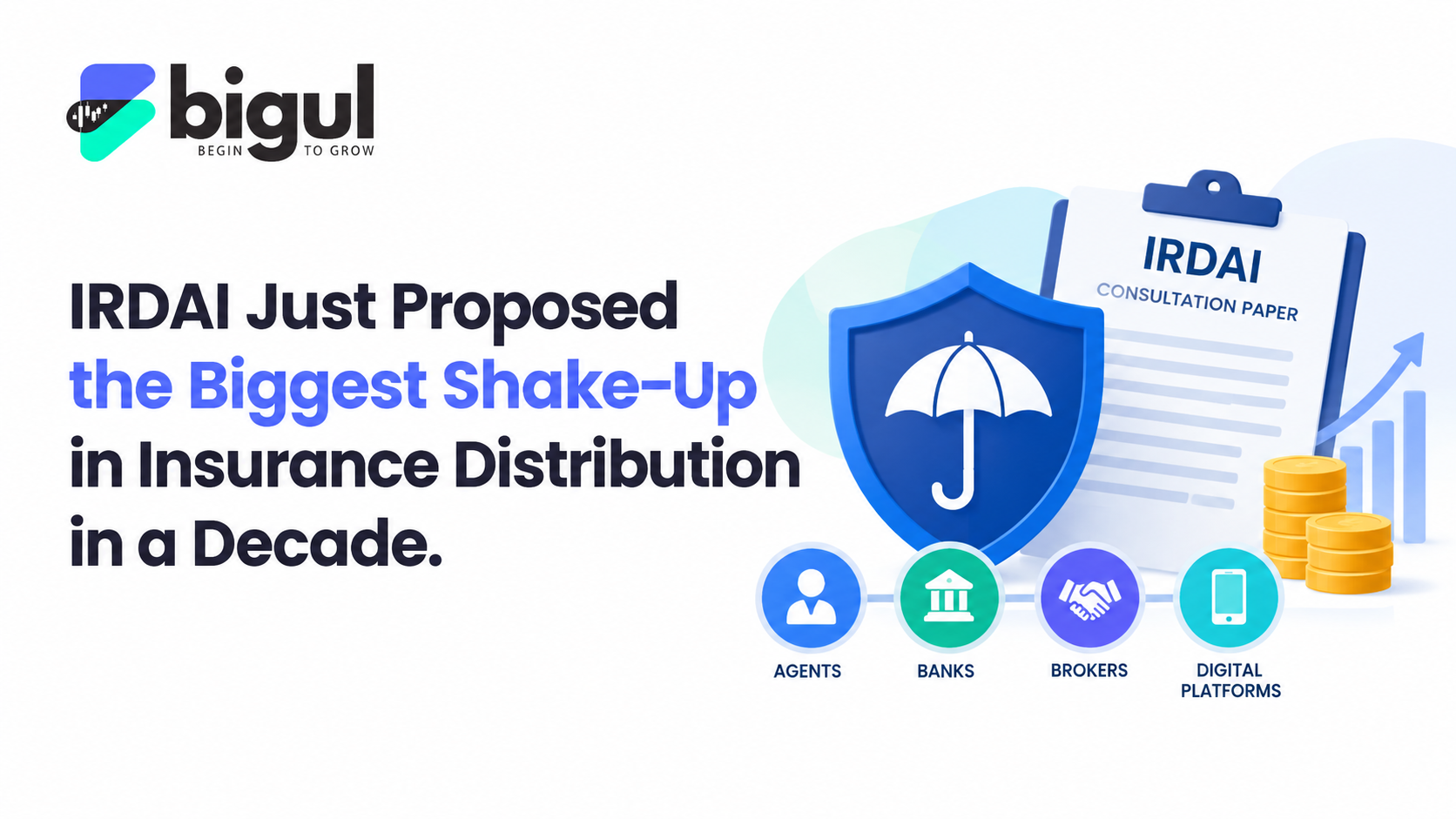
IRDAI’s Proposed Insurance Distribution Reforms: What Changes for Insurers, Distributors and Policyholders?
When you buy insurance in India, you usually don't buy it directly from the insurer.
You are buying it through someone in between. An agent. A bank. A broker. A digital platform.
And that someone in between earns a commission from the insurer for bringing you to them.
That model, which has powered India's insurance distribution for decades, just received its most significant regulatory challenge since the sector was liberalised.
What Happened?
On September 23 2026, IRDAI released a consultation paper titled
"Recalibrating Economics of Insurance Distribution."
The market's response was immediate.
Insurers, distributors, and banks began assessing the impact. Analysts described it as the most
significant proposed overhaul of distribution regulation since the 2023 Expenses of Management reforms.
Why Is IRDAI Proposing This?
The intent behind the paper is straightforward and genuinely defensible.
India's insurance penetration stands at just 3.7% of GDP against a global average of 7.3%. The government wants every Indian to have adequate life, health, and property cover by 2047.
But low penetration is not the only problem. A meaningful portion of the penetration that does exist has been achieved through mis-selling.
IRDAI's own data tells the story. In FY25 alone, there were over 26,600 complaints of insurance mis-selling and unfair business practices. A 14% rise from the previous year.
And the commission data explains why mis-selling happens.
Between FY23 & FY25, insurance premiums grew 28%. Distributor commissions grew 125%. Motor premiums grew 34% while motor commissions grew 259%. In retail health, premiums rose 53%, and commissions rose 118%.
Commissions grew significantly faster than the business. Which means the incentive to sell regardless of whether the product suited the customer was growing with it.
What Is Actually Being Proposed
Five major changes are on the table.
1. Simplifying the distribution structure. Instead of separate rules for agents, brokers, corporate agents, web aggregators, and other intermediaries, IRDAI wants to group them into three broader categories.
2. Tightening overall expense limits. The Expenses of Management, the overall cap on what an insurer can spend on distribution, would be reduced gradually over five years. Life insurers would move to 15% of gross direct premium within two years and 12.5% within five. General insurers from 30% to 20% over five years.
3. Bringing back product-level commission caps. These were removed in 2023. They are coming back significantly lower. Health insurance commissions proposed at 5%, down from 40% currently. Credit life at 2%, down from 28%. Own damage motor at 5% down from 16%.
4. Cracking down on mis-selling. Commissions must be disclosed. Bundling insurance with loans compulsorily would no longer be allowed. And if a sale turns out to have been improper, the distributor doesn’t get to keep the commission.
5. Building digital infrastructure. Platforms like Bima Sugam and a proposed Public Insurance Registry would give customers a direct route to buy and manage policies — without going through a commission-earning intermediary every time.
Who Gets Hit And How Hard?
Distributors are the most exposed.
Analysts estimate commissions could compress 70 to 90% in several high-margin categories if the proposals are implemented as written.
Credit-linked insurance is particularly vulnerable. Payouts to NBFCs on these products have reached approximately 42% of the premium. The proposed cap is 2%.
Insurance commission income accounted for about 26% of L&T Finance's FY26 profit before tax and 38.4% of Piramal Finance's FY25 profit before tax. For entities where insurance commission is this significant portion of earnings; the proposed caps represent a fundamental business model challenge.
Smaller distributors with limited cash reserves and no ability to absorb a prolonged margin compression, face a harder road than larger players. The industry may see consolidation as a result.
What It Means for You as a Policyholder
Lower commissions don’t automatically mean lower premiums.
When you pay an insurance premium; the insurer does not keep it as profit. It goes into a risk pool used to pay claims. If an insurer spends less on commissions, more of that premium stays in the pool which could eventually mean better claim experiences or improved product terms.
But whether insurers pass those savings to customers or retain them to improve margins will depend on competitive dynamics in the market.
What is more certain; the consultation paper explicitly targets mis-selling. The prohibition on compulsory bundling of insurance with loans alone is a meaningful consumer protection. The clawback mechanism for improper sales creates a direct financial consequence for distributors who push unsuitable products.
For a customer; the most likely near-term impact is a different kind of conversation with whoever sells you insurance. One where the commission incentive is lower and the accountability for suitable advice is higher.
Also Read :- Risk management rules every trader must follow for stock market investment.
Where Things Stand
The consultation paper is a draft. IRDAI has invited feedback from insurers, intermediaries, policyholders, and stakeholders with a deadline of October 25 2026.
Days after the paper was released, IRDAI Chairman Ajay Seth held an informal meeting with senior executives of select life, general, and health insurers. Insurers sought a gradual reduction in commissions, differentiated EoM limits, and relaxation of norms for group credit life insurance policies.
The final regulations and the timeline for implementation will be shaped by what comes out of that feedback process.
IRDAI believes the current distribution economics are misaligned with customer interest. The paper is a formal signal that the regulator intends to change that whether through these specific proposals or through a modified version of them.
Related Guide :- Financial checklist Every Indian Investor Need Right Now to audit your complete portfolio.
FAQs
Will insurance premiums fall if commissions are capped?
Not necessarily. Lower distribution costs could improve the economics of insurance products over time but whether those savings reach customers depends on how insurers respond to the new framework.
Are these changes final?
No. The consultation paper is open for feedback until October 25 2026. The final regulations will be issued after IRDAI reviews stakeholder responses.
What does EoM mean?
Expenses of Management; the overall cap on what an insurer can spend on distribution, commissions, and operating expenses as a percentage of premium income.
Explore More :- Step up SIP , STP and SWP Three Mutual fund Tools Every Investor should Know