



Risk Management Rules Every Trader Should Follow
 04-Sep-2026
 2 mins read
Trending Now
-

Turtlemint Fintech Solutions IPO GMP, Open Date, Price Band, Issue Size 18-Jun-2026
-
.jpg)
SpaceX IPO: Elon Musk Becomes World's First Trillionaire — Key Facts Explained 13-Jun-2026
-

Zepto IPO, Open Date, Issue Size, Price Band and UDRHP Filed 12-Jun-2026
-

Shah Metacorp Rights Issue May 2026 Details, Record Date, Issue Price 26-May-2026
-

Jio Is Going Public. Here's What That Actually Means for You 11-May-2026
-

Parle Products IPO: India’s Most Iconic Biscuit Brand Going Public? 30-Apr-2026
-
Gujarat Cotex Rights Issue 2026 Details, Record Date, Issue Price 27-Mar-2026
-
.jpg)
Avi Polymers Rights Issue 2026 Details, Record Date, Issue Price 11-Feb-2026
-

D & H India Rights Issue 2026 Details, Record Date, Issue Price 05-Feb-2026
-

Avasara Finance Rights Issue 2025 Details, Record Date, Issue Price 29-Dec-2025

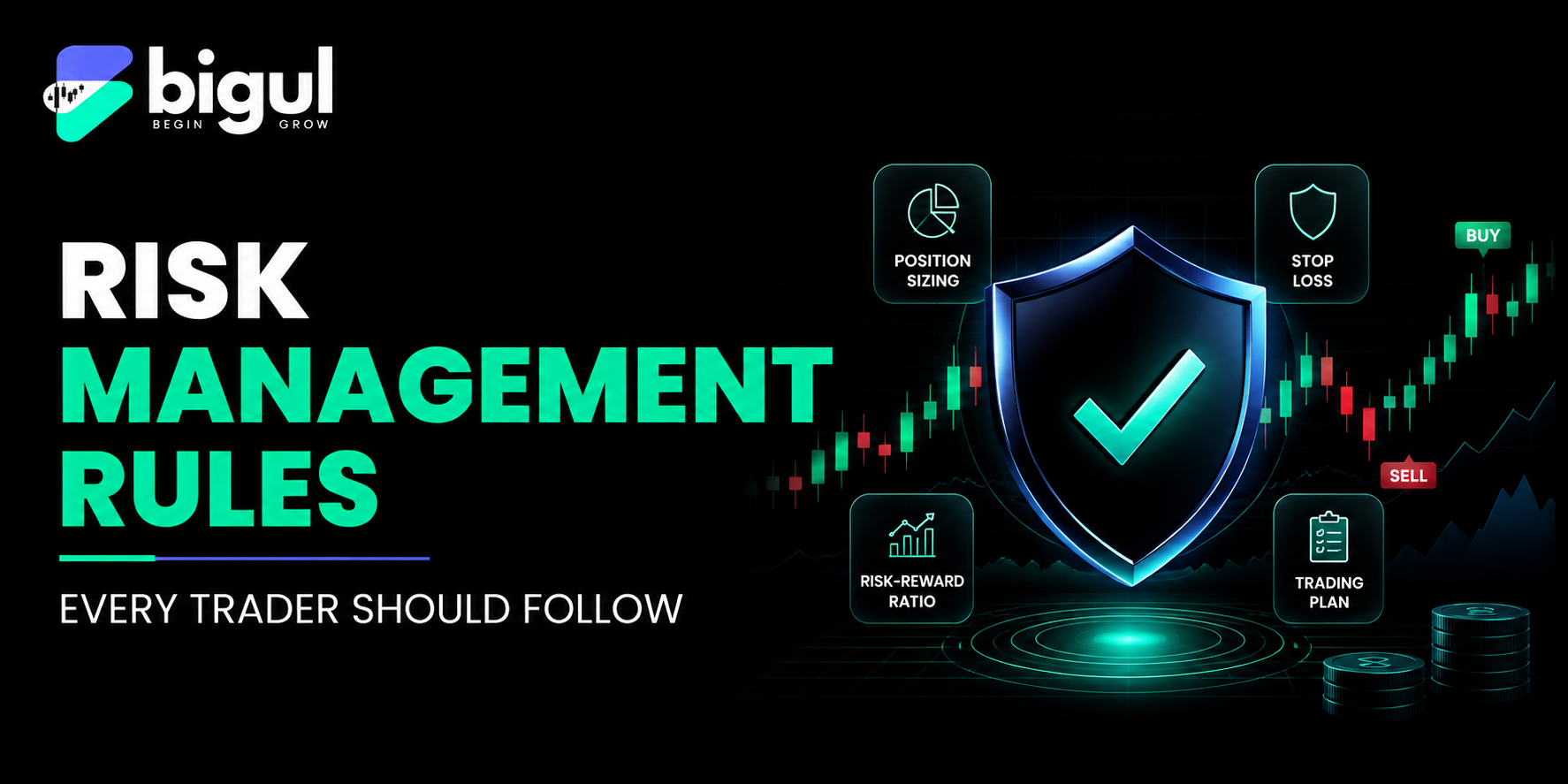
8 Essential Risk Management Rules Every Trader Should Follow
Nearly 9 in 10 retail traders in India lost money in FY26.
Total losses around ₹91,685 crore. Transaction costs alone around ₹25,000 crore.
The reason is never lack of market knowledge, it is always lack of risk management.
Here are the rules that separate traders who last from traders who do not.
Rule 1 — Risk Only What You Can Afford to Lose
Before placing a single trade, define your trading capital clearly.
Trading capital is money you can afford to lose entirely without it affecting your financial life. Not your emergency fund or money you might need in the next six to twelve months.
When trading capital is money you genuinely cannot afford to lose, every drawdown becomes a crisis. Crisis thinking produces the worst decisions at the worst moments.
When trading capital is money you have mentally ring-fenced for this purpose; losses are setbacks, not emergencies. That distinction changes everything about how you trade.
Rule 2 — The 1% to 2% Rule
Never risk more than 1%-2% of your total trading capital on a single trade.
If your trading account is ₹5 lakh, maximum risk per trade is ₹5,000 to ₹10,000.
This sounds conservative. It is also what makes a trading career survivable.
Position sizing is about ensuring that no single trade, however confident the setup can end your trading journey.
Rule 3 — Always Use a Stop Loss
A stop loss is a pre-committed decision made when thinking is clear about the maximum loss a trade is allowed to make before you exit.
The most expensive stop loss mistake is not placing it incorrectly. It is placing it and then moving it when the trade goes against you.
The stop loss is not there for trades that work. It is there for the ones that do not to convert a potentially catastrophic loss into a manageable one.
Rule 4 — Define Your Risk-Reward Before Entering
Every trade should have a clear answer to two questions before it is placed.
How much can I lose if this trade goes wrong? How much do I make if it goes right?
A trade with a risk-reward ratio of 1:1 risking ₹5,000 to make ₹5,000 requires a win rate above 50% to be profitable after costs. A trade with a 1:3 ratio, risking ₹5,000 to make ₹15,000 can be profitable even with a win rate of 35%.
Most beginner traders focus entirely on the probability of being right. Professional traders focus equally on the reward for being right relative to the cost of being wrong.
Minimum risk-reward ratio worth considering 1:2. For every rupee risked, the potential reward should be at least two rupees.
Rule 5 — Set a Daily Loss Limit
Decide before the market opens, how much loss in a single day will make you stop trading for that day.
A common rule; stop trading when daily losses hit 3% to 5% of total capital.
This rule exists for one reason. The worst trading decisions; the oversized positions, the emotional exits happen after a bad day when the impulse to make it back is at its strongest.
The market will be there tomorrow. Your capital may not be if you trade through that impulse.
Rule 6 — Never Average Down on a Losing Trade
Averaging down means adding to a position that is already losing, buying more of something that is falling in the hope that it will recover.
For long-term investors with strong conviction in a fundamentally sound business, averaging down can make sense.
For traders; it almost never does.
Trading positions are entered for a specific reason at a specific price. When the price moves against you, the market is telling you something. Adding to the position doesn’t improve the trade. It increases the exposure to a position that is already not working.
The rule is simple. If the original stop loss is hit, exit. Do not add. Do not rationalise. Exit.
Rule 7 — Keep a Trading Journal
The trading journal is where you discover that you consistently exit winning trades too early. That you hold losing trades too long.
These patterns are invisible without documentation. With documentation, they become fixable.
Review the journal weekly. Look for patterns. Adjust the process.
The traders who improve fastest are the ones who are most honest about their own trading on paper, in writing, without defensiveness.
Rule 8 — Separate Trading Capital from Investment Capital
Keep two completely separate accounts.
One for long-term investments. One for active trading.
Never use investment capital to fund trading losses. Never use trading profits to make impulsive investment decisions.
The two activities require different mindsets, time horizons, and different risk tolerances. Mixing them creates confusion about which rules apply and confusion in markets is expensive.
The Most Important Risk Management Rule
All of the above rules are valuable.
None of them work if they are not followed consistently, not just when it is easy, but specifically when it is hard. When the position is underwater and every instinct says act. When the streak of losses is testing patience. When the opportunity looks so obvious that skipping the checklist feels like leaving money on the table.
Risk management is the discipline to follow those rules when not following them feels most reasonable.
That discipline maintained consistently is the difference between a trading career and a trading experiment.
FAQs
What is the most important risk management rule for traders?
Position sizing; never risking more than 1% to 2% of total capital on a single trade. This ensures that no single loss is large enough to permanently impair the portfolio.
Should beginners use stop losses?
Yes always. A stop loss converts a potentially unlimited loss into a defined, manageable one. It should be placed before the trade is entered, not after.
What is a good risk-reward ratio for trading?
A minimum of 1:2, risking ₹1 to make ₹2. This allows a trader to be profitable even with a win rate below 50%.
Also Read :- A Beginners Guide to online trading