



Common Mistakes Beginner Traders Make And How to Avoid Them
 01-Sep-2026
 2 mins read
Trending Now
-

Turtlemint Fintech Solutions IPO GMP, Open Date, Price Band, Issue Size 18-Jun-2026
-
.jpg)
SpaceX IPO: Elon Musk Becomes World's First Trillionaire — Key Facts Explained 13-Jun-2026
-

Zepto IPO, Open Date, Issue Size, Price Band and UDRHP Filed 12-Jun-2026
-

Shah Metacorp Rights Issue May 2026 Details, Record Date, Issue Price 26-May-2026
-

Jio Is Going Public. Here's What That Actually Means for You 11-May-2026
-

Parle Products IPO: India’s Most Iconic Biscuit Brand Going Public? 30-Apr-2026
-
Gujarat Cotex Rights Issue 2026 Details, Record Date, Issue Price 27-Mar-2026
-
.jpg)
Avi Polymers Rights Issue 2026 Details, Record Date, Issue Price 11-Feb-2026
-

D & H India Rights Issue 2026 Details, Record Date, Issue Price 05-Feb-2026
-

Avasara Finance Rights Issue 2025 Details, Record Date, Issue Price 29-Dec-2025

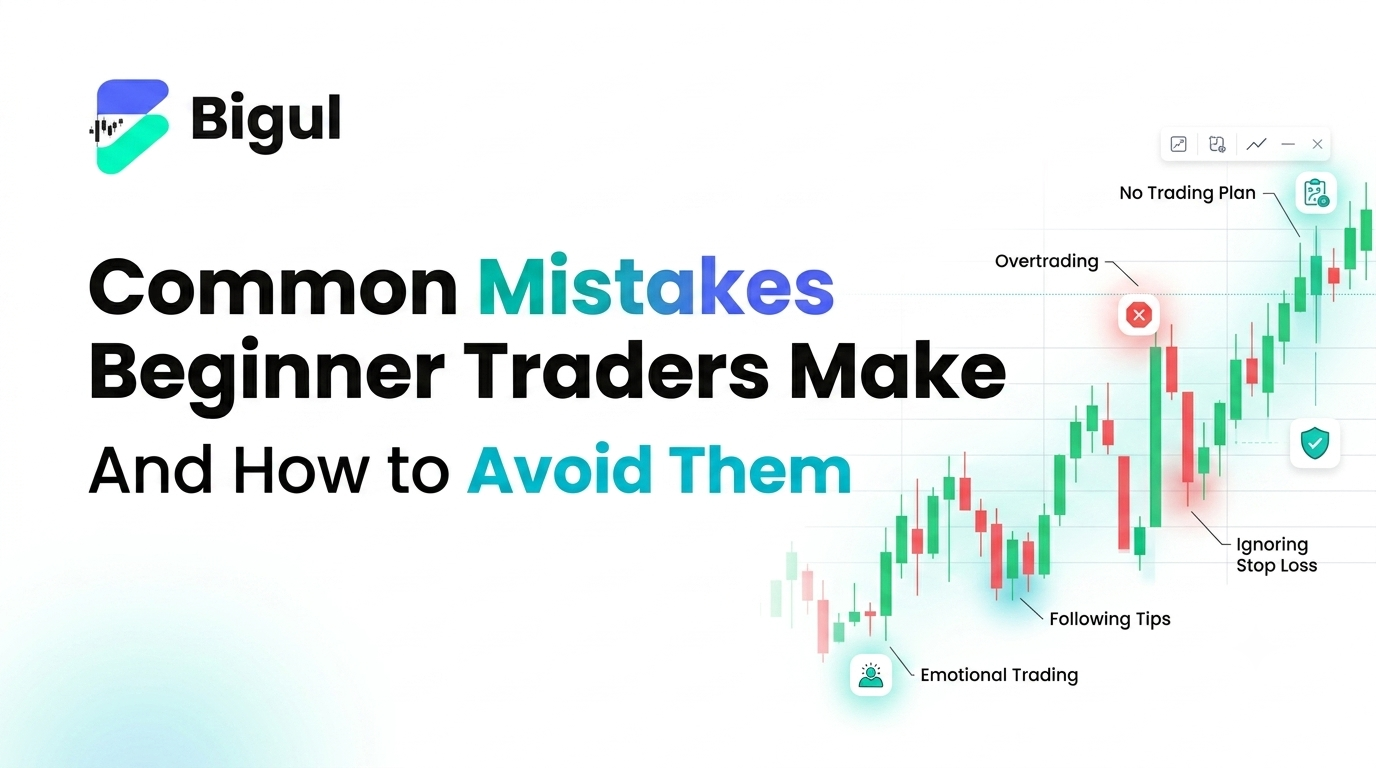
Common Trading Mistakes Beginners Make and How to Avoid Them
Every trader makes mistakes.
The ones who last are not the ones who never make them. They are the ones who make them early, understand why they happened, and build a process that stops them from repeating.
The problem is that most beginner traders make the same mistakes because nobody told them what to watch for before they started.
Here is what actually goes wrong and what to do about it.
Mistake 1 Trading Without a Plan
The most common mistake beginner traders make is not having a plan before the trade is placed.
Not just which stock to buy but why. At what price. What the target is. Where the stop loss sits. And what the specific reason is to exit both if the trade works and if it does not.
Without a plan every decision gets made in real time, under pressure, with a live P&L updating on the screen.
The plan doesn’t need to be complicated. It needs to exist written down, decided before the market opens, not improvised after the position is live.
Mistake 2 Ignoring Stop Losses
A stop loss is a pre-committed decision made when thinking is clear about the maximum loss a trade is allowed to make before it is exited.
The position falls to the stop loss level. The trader tells themselves the thesis is still intact, the move is temporary, it will recover. The stop loss gets moved lower. The loss gets larger. And by the time the exit happens it is significantly more expensive than the original stop loss would have been.
The stop loss is not there for the trades that work. It is there for the ones that don’t ensure that a losing trade stays a manageable loss rather than becoming a portfolio-defining one.
Set it before the trade. Honour it when it is hit.
Mistake 3 Overtrading
In equity trading every trade has a cost. Brokerage. STT. Exchange fees. GST. These costs add up, and they add up regardless of whether the trade was profitable.
Every trade is an opportunity for a good decision or a bad one. The trader who places ten trades a day is making ten times as many decisions and creating ten times as many opportunities to get something wrong.
Mistake 4 Trading on Tips and Social Media
A tip from a colleague, a WhatsApp group or an influencer is not a trading strategy.
It is someone else's opinion about a stock, without context about their entry price, their risk tolerance, or their exit plan. Following it means entering a trade you do not understand, with no plan for what to do if it moves against you.
SEBI's data consistently shows that acting on unverified tips is one of the leading causes of retail trader losses. The person sharing the tip has almost always already entered and may exit while you are still holding.
Trade what you understand. Take responsibility for your own decisions.
Mistake 5 Revenge Trading
A bad trade happens. The loss stings. The immediate instinct is to make it back quickly, with the next trade, by taking more risk than the original plan allowed.
This is called revenge trading and it is one of the most reliable ways to turn a manageable loss into a significant one.
The market doesn’t know you had a bad trade. It does not owe you a recovery. Taking larger positions to recoup losses does not improve the odds of the next trade; it just raises the stakes at exactly the moment when emotional clarity is at its lowest.
After a losing trade the correct response is to step back, review what happened, and return to the plan. Not to immediately place another trade to compensate.
Mistake 6 No Risk Management
Position sizing is the part of trading that beginners almost universally ignore and experienced traders universally say is the most important.
Putting 50% of a trading account into a single trade is not conviction. It is a concentration risk. A single trade going wrong can permanently impair a portfolio that took months to build.
A simple rule risking no more than 1%-2% of the total trading capital on any single trade ensures that even a string of losing trades remains recoverable.
Risk management is about making sure no single loss ends the journey.
Mistake 7 Letting Emotions Drive Decisions
Fear & greed are the two emotions that drive most bad trading decisions.
Fear exiting a good trade too early because a small profit felt better than the anxiety of holding. Or holding a losing trade too long because realising the loss felt worse than the hope of recovery.
Greed sizing up aggressively after a good run, as if recent success has changed the underlying odds of the next trade.
The antidote to both is a process. Written rules. Pre-committed decisions. A framework that functions independently of how the market feels on any given day.
The process doesn’t guarantee good outcomes. But it removes emotion from the equation and emotion is responsible for most of the avoidable mistakes.
FAQs
How much capital should a beginner start trading with?
Start with an amount you can afford to lose entirely, without it affecting your financial life. Trading involves real risk of loss capital preservation matters more than position size at the beginning.
How do I know when to exit a trade?
Define your exit before you enter. Both the profit target & stop loss should be decided before the position is live, not after the price has moved.
Is intraday trading suitable for beginners?
Intraday trading requires fast decision-making, real-time monitoring, and strong emotional discipline. Most traders benefit from starting with delivery-based trades where there is more time to think.
How many trades should a beginner place per day?
Quality over quantity. One well-researched trade is better than ten impulsive ones. Focus on building a process before building volume.
Also Read :- Invest in Quick trade